
Neurofeedback
Neurofeedback, also known as EEG biofeedback, is a gentle, non-invasive method of training the brain to regulate itself more efficiently. It’s based on a simple idea: when the brain receives real-time information about its own activity, it learns — naturally and effortlessly — to function in a more balanced and flexible way. Just like a mirror helps you correct your posture, neurofeedback reflects your brain’s internal patterns, helping it find a healthier rhythm on its own.
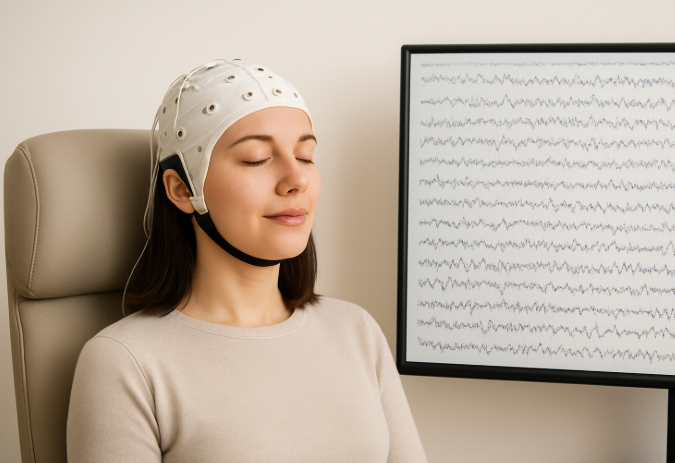
Neurofeedback isn’t a treatment or a diagnosis; it’s a learning process that empowers your brain to self-correct. It’s a collaboration between neuroscience, technology, and your own innate intelligence. Whether you’re looking to calm your mind, improve focus, sleep better, or simply reconnect with a sense of inner balance, neurofeedback offers a safe and powerful way to support lasting change — from the inside out.
The brain is an incredibly dynamic system. Its electrical activity — the brainwaves — constantly shifts to match your mental and emotional state. When this rhythm becomes too rigid, you may experience anxiety, poor sleep, difficulty focusing, or emotional imbalance. Neurofeedback helps restore this natural flexibility, allowing the brain to move smoothly between states — focused when needed, calm when resting, and deeply relaxed when it’s time to unwind.
During a session, small sensors placed on the scalp read your brain’s electrical signals. The data is translated into visual or auditory feedback — for instance, a movie playing smoothly when your brain moves toward balance, or dimming slightly when it drifts away. The learning happens subconsciously, without effort. Over time, your brain begins to recognize and prefer these more stable, efficient patterns — a process known as operant learning. With consistent training, these new patterns become your brain’s new baseline through neuroplasticity — its natural ability to rewire itself.